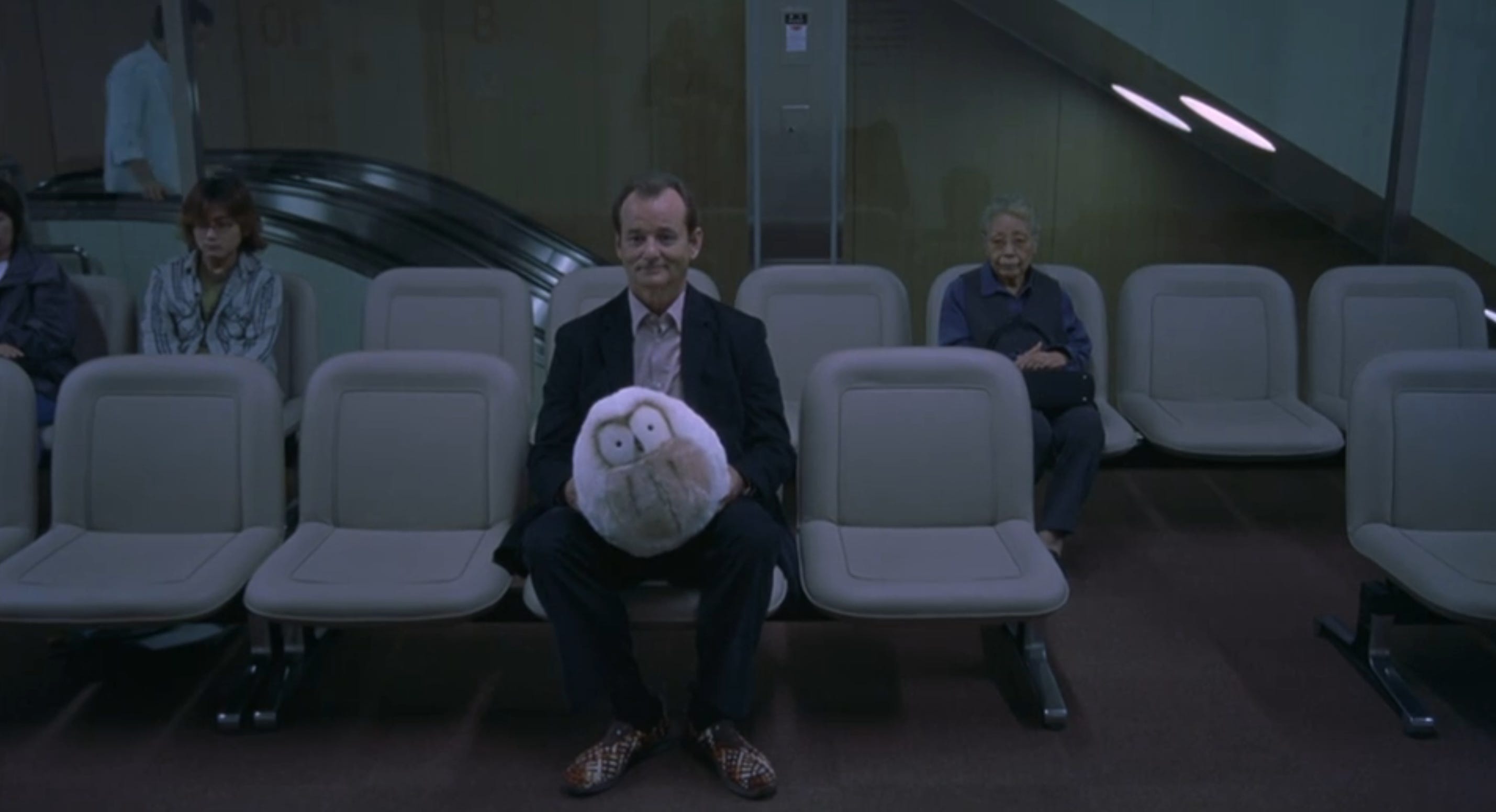
Notes on Lost in Translation
I’m not going to warn about spoilers, because this movie came out in 2003.
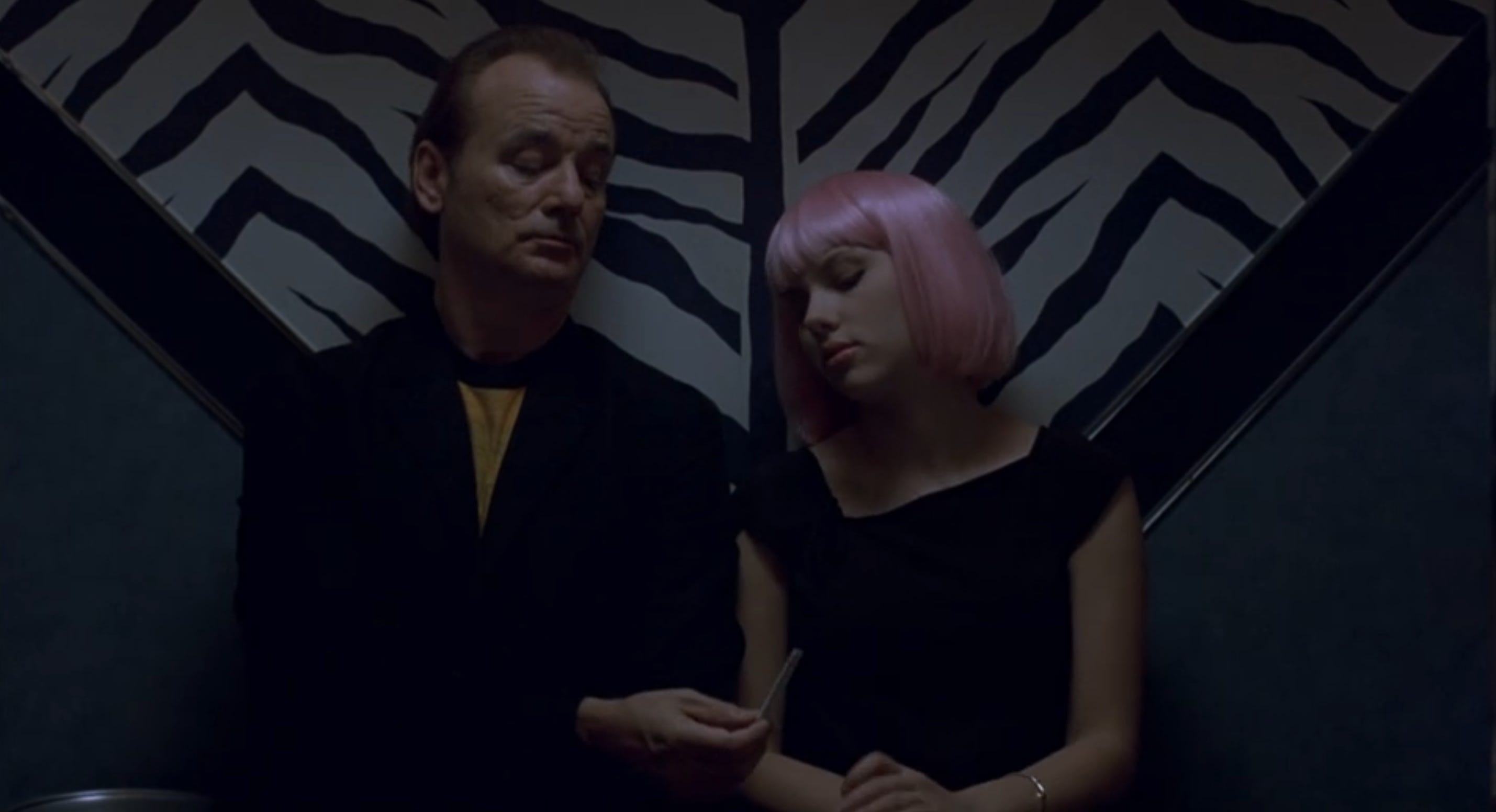
I revisited Lost in Translation (2003) a while ago and was reminded of its moving depictions of a constellation of perennial human experiences: loneliness, infidelity, celebrity, insomnia, culture shock, etc. I recently rewatched to try to confirm or disconfirm my impressions. Some of them as follows.
***
It is a real pleasure, if a disorienting one, to revisit some of these works from what one might call the Long Nineties. 2003 is solidly in the Aughts but Lost in Translation is still a work of Nineties Consciousness; director Sofia Coppola is Gen X, born in 1971, and the film’s primary emotional driving force of twin unhappy marriages is transparently rooted in Coppola’s own dissolving Nineties marriage to Spike Jonze.
The particular cultural touchstones of the Aughts do not yet exist in Coppola’s hermetic Tokyo nocturne: no computers are seen, and cell phones are rare. There doesn’t seem to be email. The Internet might as well not exist.
This contributes to the film’s sense of dislocation. The aesthetics of 2003 (clothing, music, hairstyles) are layered over patterns of life from 1995, or 1985. Its characters moulder in bars, staring into space or making eyes across the room. They smoke cigarettes and even cigars indoors. They trade faxes. They talk to each other! We can’t quite place when we are.
***
The attraction of this disorientation is that we experience it, for some reason, as comfortable, inviting, certainly stylish. We are freed from having to commit to anything in particular. We can just float along. This is an illusion, but it is an illusion that we are able to share with the two almost-lovers, Bob (Bill Murray) and Charlotte (Scarlett Johansson).
***
Tokyo is presented, perhaps inescapably, as a symbol of the cutting edge of modern life, a whirling kaleidoscope of neon and midnight gamers and absurdist sexual degeneracy. But this is not a tale of big-city alienation, though it seems to have been often read this way. Bob and Charlotte’s excursions out into the city present images of warmth, connection, new friends, adventure; the alienation arises in the space between the welcoming zaniness of the city and their own interior desolations, which in a sense they idolize, and cannot let go of. The alienation is smuggled in with them; don’t blame Tokyo.
Indeed, Coppola’s portrait of Tokyo joins the vast pantheon of cinematic love-letters to cities. It hardly seems coincidental, for this and other reasons, that La Dolce Vita plays on late-night TV in the background of one of Bob and Charlotte’s heart-to-hearts.
***
A usual characteristic of great works of art is a combination of timelessness and specificity. Bob and Charlotte’s romance could only have happened in the way it happened in a particular city and a particular hotel in a particular moment, but in another sense it could equally have happened between a jaded Cappodocian textile trader and a disenchanted young wife accompanying her Varangian husband to Constantinople in AD 1037. (Any producers who read me, just hit “reply” at the bottom of this email.)
***
Much commentary has focused on the enveloping nature of the soundtrack, which is ethereal and melancholic, on-trend with just the right dose of rough-around-the-edges classics. The quintessentially knowing Gen X playlist curation. We may always be grateful that they transmuted their generational dissatisfaction into sterling musical taste.
Equally striking is Coppola’s painterly sense. The camera often spools out long tracking shots or settles on beautifully composed tableaus into and through which the characters move.
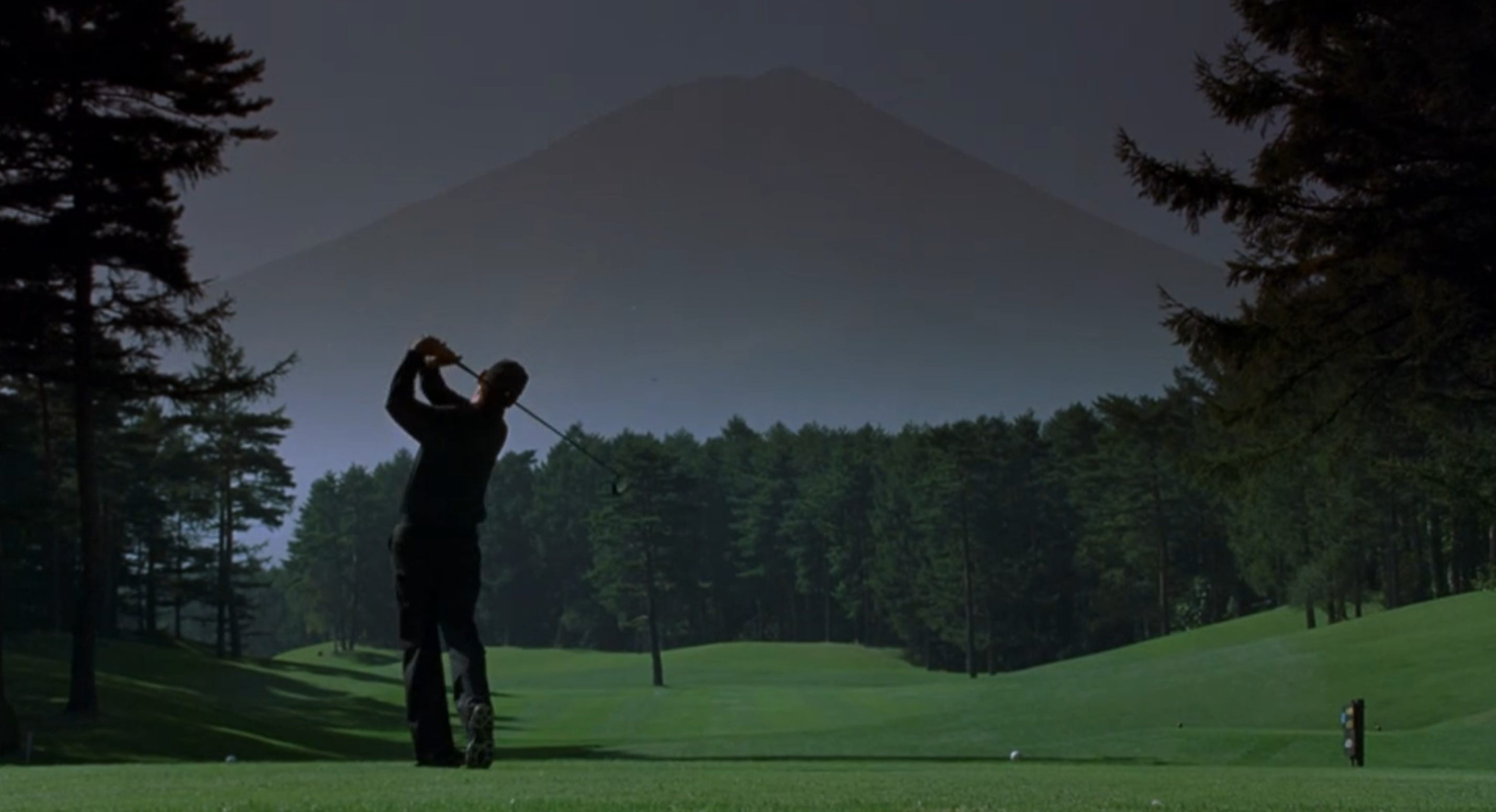
This visual stability balances against the frenetic energy of the megalopolis and imbues it with a strange calm, a quietness, a bemused detachment. Contemporaneous reviews will occasionally mention Coppola’s friend Wes Anderson, and there is something of his obsessive composition here, but Coppola eschews Anderson’s fastidiousness. Nothing is mannerly. The feeling is one of looseness, flow, aided by often spontaneous camera work. Much of the dialogue was improvised and the script itself consisted largely of lightly-sketched vignettes, with Coppola trusting to the serendipity of local lighting and the vagaries of street conditions.
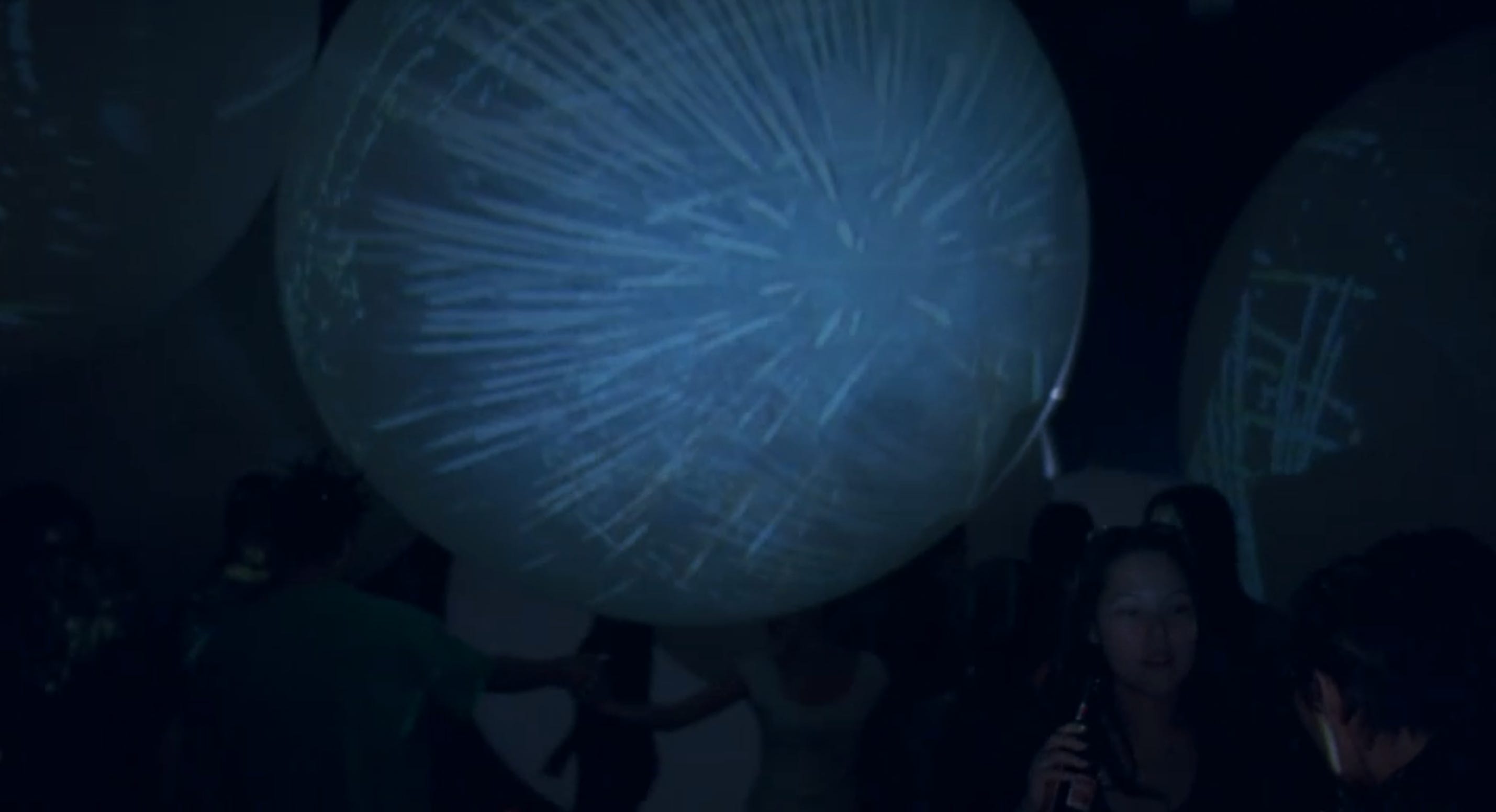
She fixates on the telling detail the way an impressionist plein-air painter might: she seizes it as it comes, she accepts that the light in which she captures it may never arrive in the same way again, she elevates it to a fine point in a visual hierachy in which the surrounding atmosphere is allowed to swirl, swell, and fade as it desires.
***
When reviewers call the film “moody,” this is what they mean, this and the graininess of real film. Mood means, inter alia, allowing some things to be seen, and others to remain unseen, but still present. Reliance on mood is risky, which is perhaps why increasingly few films achieve or even attempt it, because it requires the unsaid, the unseen, the implied. It is a trance easily broken, and requires both happy chance and unusual artistic control.
***
I also learned that Lost in Translation was an early target of cancel culture, with activists lobbying for its defeat at the Academy Awards due to the allegedly shallow, stereotypical, and overly eroticized portrayal of Japanese culture and the centering of white Western characters. Of course it presents a crude stereotype of Japanese culture that centers Western characters. The film treats, among other things, the experience of luxury international travel and the ways that local cultures get mutated, packaged, and consumed according to the expectations and pre-existing imaginariums of tourists and business travelers.
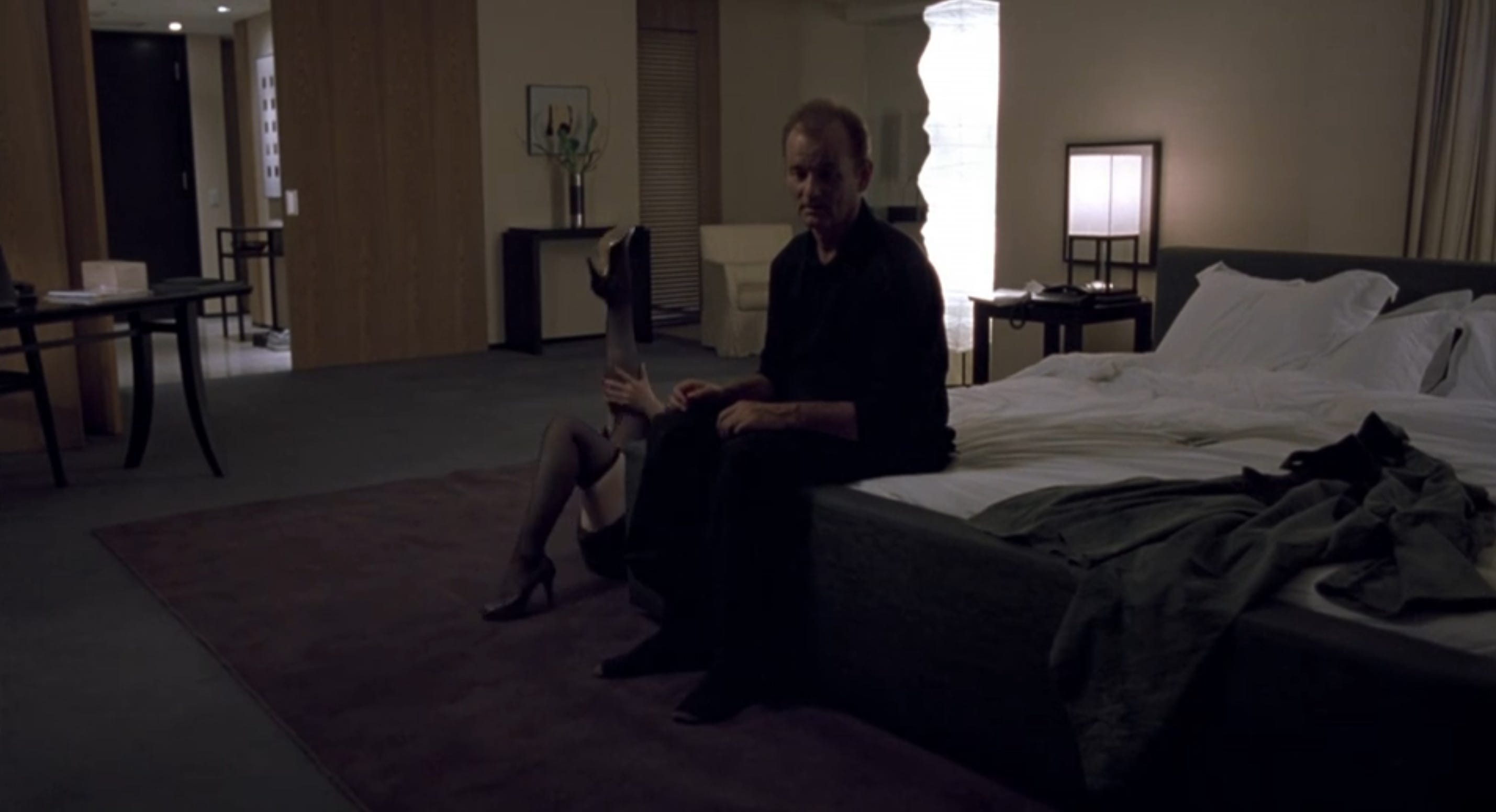
The long stretches of Japanese dialogue are intentionally not translated for us and interactions with locals are a comedy of errors for the obvious reason that the whole point is for the viewer to experience cultural dislocation through Bob’s condescending eyes. I came of age on Edward Said, I get the whole schtick, but in my advanced years I have realized that, as I grow more and more familiar with how precarious the achievement of any real work of art is, I become less and less patient with this line of argument, at least when it becomes weaponized in this way; otherwise it’s fine for killing an hour or two at a particularly dull party.
***
The point about technology is maybe a bit obvious but still important. Almost as soon as it came out, the film was already a nostalgic treatment of a kind of loneliness that had been or would soon be rendered obsolete. In a world of smartphones, Bob and Charlotte would never even have crossed paths. Their loneliness and desperation would have been diverted into a million distractions, and their connections to their homes and families would never have been severed enough to create the “other world” that allows them to act out their drama.
In this sense we get a portrait of loneliness that in comparison to our own age feels almost wholesome. In this Beforetime loneliness could still have “room to breath”—it could still be generative of something other than increasingly concentrated versions of itself. It could be an impetus for and prequel to catharsis rather than a labyrinthine prison.
***
Though much of the charm is that Coppola resists catharsis. The first read of Bob and Charlotte’s affair is a relatively simple one: two lonely people finding one another and having a brief, poignant, but doomed moment of real connection. I think though that the film is sadder than this, but at the same time more hopeful.
For much of the film, especially on second watching, the purported connection between Bob and Charlotte feels rather false. Murray plays the classic sad clown, and if Charlotte is charmed by it, the observer can see that Bob’s jocularity is a sort of extension of the celebrity which oppresses him. He is trotting out his charismatic persona one more time; once again, he is hiding behind his role as entertainer.
Each starts by projecting a fantasy of themselves onto the other: Bob, as himself as a younger man, not only desirable to women but regressed to an experience of the Feminine as both chaotic and liberating, free of consequence: an eternal Present, or, perhaps, the illusion of the ability to pick and choose among an infinite versions of the Present, forever. For Charlotte, an image of herself as cultured and worldly, an intellectual and creative worthy of respect. The driving tension of the film is that Coppola subtlely presents each as aware on some level of the mutual fiction, through their tense body language, their clumsy silences, their recourse to deflection and jokes at the precipices of intimacy, and their chasteness. The difficulty is that such dynamics can also appear at the outset of real love.
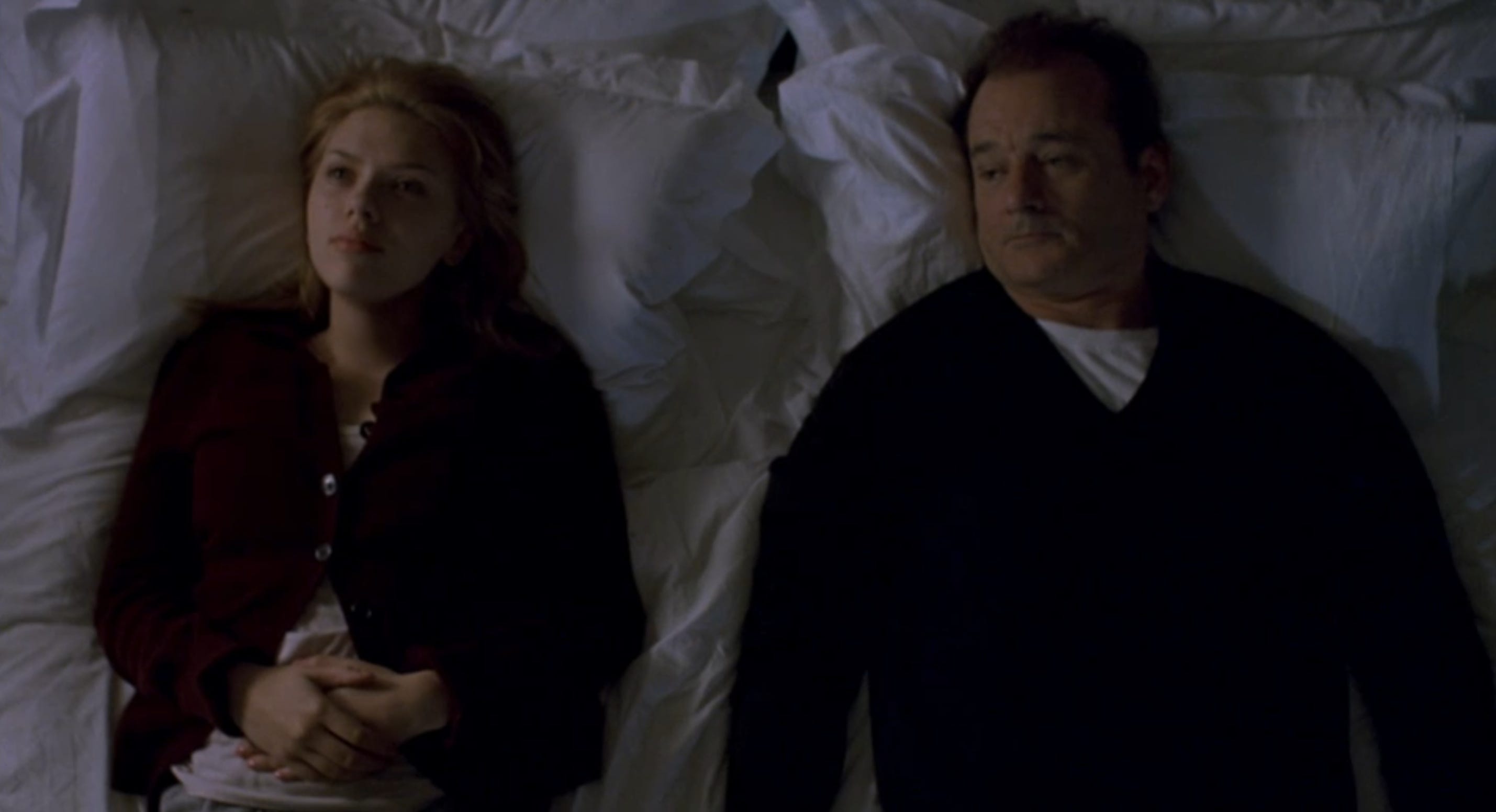
Bob and Charlotte’s hesitance to consummate their mutual attraction can be read on at least two levels: the level of the romantic trope of deferred and frustrated union which builds tension to a satisfying climax, a trope which is ultimately undermined by the film’s ambiguous ending; but also at this deeper level, in which the romantic trope is resisted, even as it is self-consciously enacted, by each—because each, more than a guilty conscience, fears the confrontation with and the collapse of their fantasy worlds, which intertwine but do not exactly touch.
Really touching would mean life would have to change. Perhaps more importantly, it would mean an end to painless fantasies of sudden, liberating change. To love each other, even to make love to each other, they would have to start revealing who they actually are. Bob would have to eventually come to Charlotte as he actually is when he’s not performing: sullen, haggard, sarcastic, resentful. Charlotte, too, would have to drop, at least sometimes, her whimsical pixie act, and deal with who she is in regular life: her arrogance hiding behind shyness, her inability to communicate, her penchant for tenderly cultivating her own unhappiness as a proof of her inner depths.
***
There is at least one moment of real connection: Charlotte arriving bright and early one morning to find Bob recently in bed with the hotel bar singer. Ah, here is Bob as he really sometimes is: shabby, impulsive, self-destructive, vindictive. Here is Charlotte as she really sometimes is: naive, disillusioned, much younger than she pretends. She mocks his age; he spits back at her what he had likely already thought more than once: “Wasn’t there anyone else around to lavish you with attention?” The bitterness of the moment injects some reality into things, and brings down to earth a romance, and a film, that was on the brink of floating away.
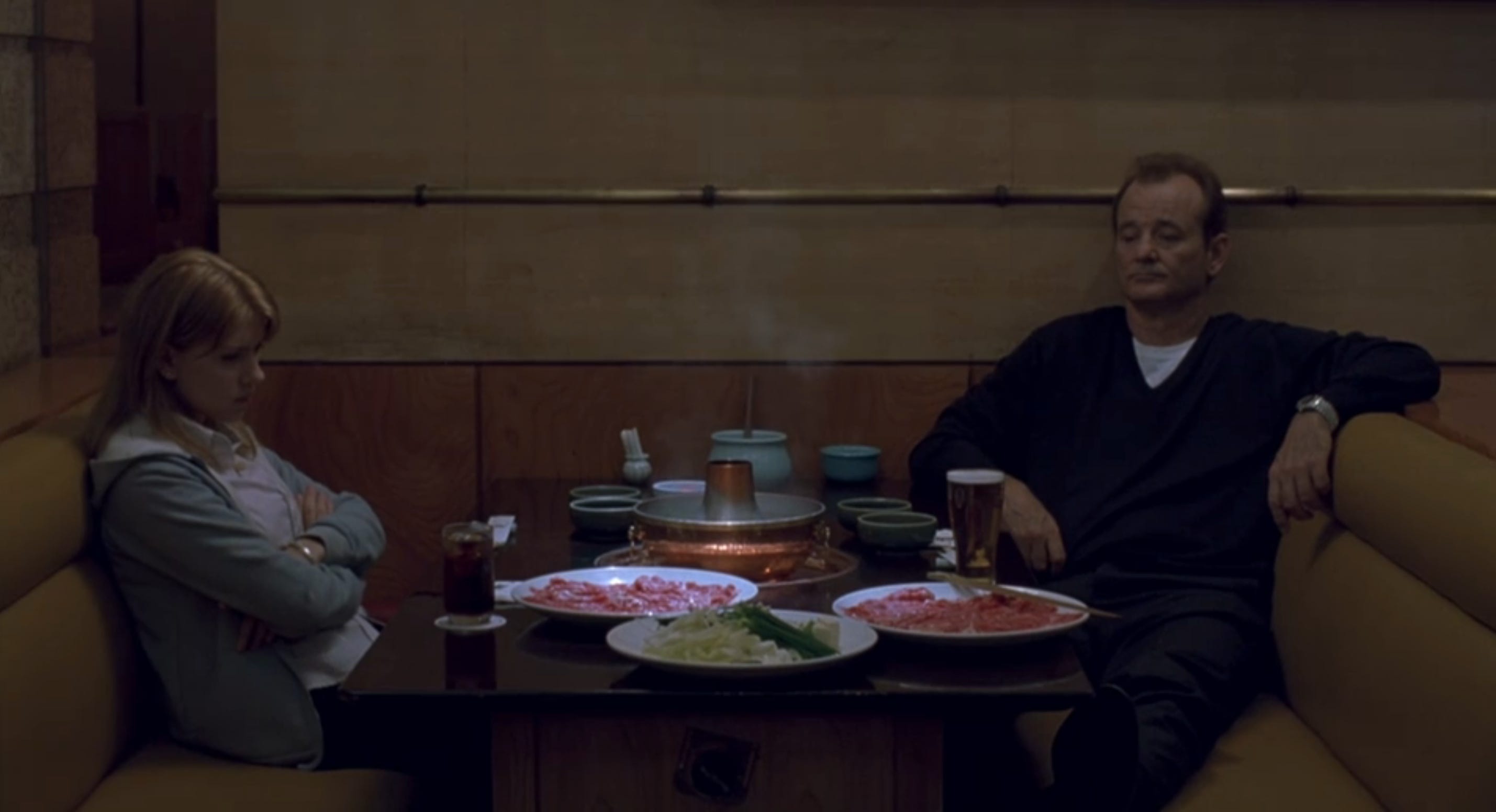
So perhaps after all it is love. Or proto-love. They achieve at least one condition of it, seeing the worst of the other, and forgiving it. Of course, Bob’s transgression is not Charlotte’s to forgive, but love can be understandably solipsistic in this way. He sinned against his wife, but why not against Charlotte, too. One stone can break several hearts.
And so, several additional signs of love go on piling up, less idealized but no less authentic: jealousy, fury, possessiveness, undeniable pain.
***
The film’s ending is famously ambiguous. That is fitting. I waver but personally I think both go back to their marriages. I think in this sense it’s a pro-marriage film, despite Bob, at least, portraying marriage as a tundra of resentment, miscommunication, and loneliness. As with Tokyo itself, these are things that Bob and Charlotte have brought with them into marriage. I said the film was more hopeful than it seemed because I believe it shows both of them having seen, even if only in a sad, short, and painful glimpse, that they will inevitably carry these things into any other relationship. That fantasy can’t save them. That’s the start of a sort of wisdom.
Maybe I’m deluded. But I want to believe in the real romantic ending, the hard-won affirmation of marriage, if only because a film of apparently naive romanticism papering over an apparently thoroughgoing cynicism which itself only thinly covers a deep hunger for real romanticism is one of the more Gen X things I can think of.