
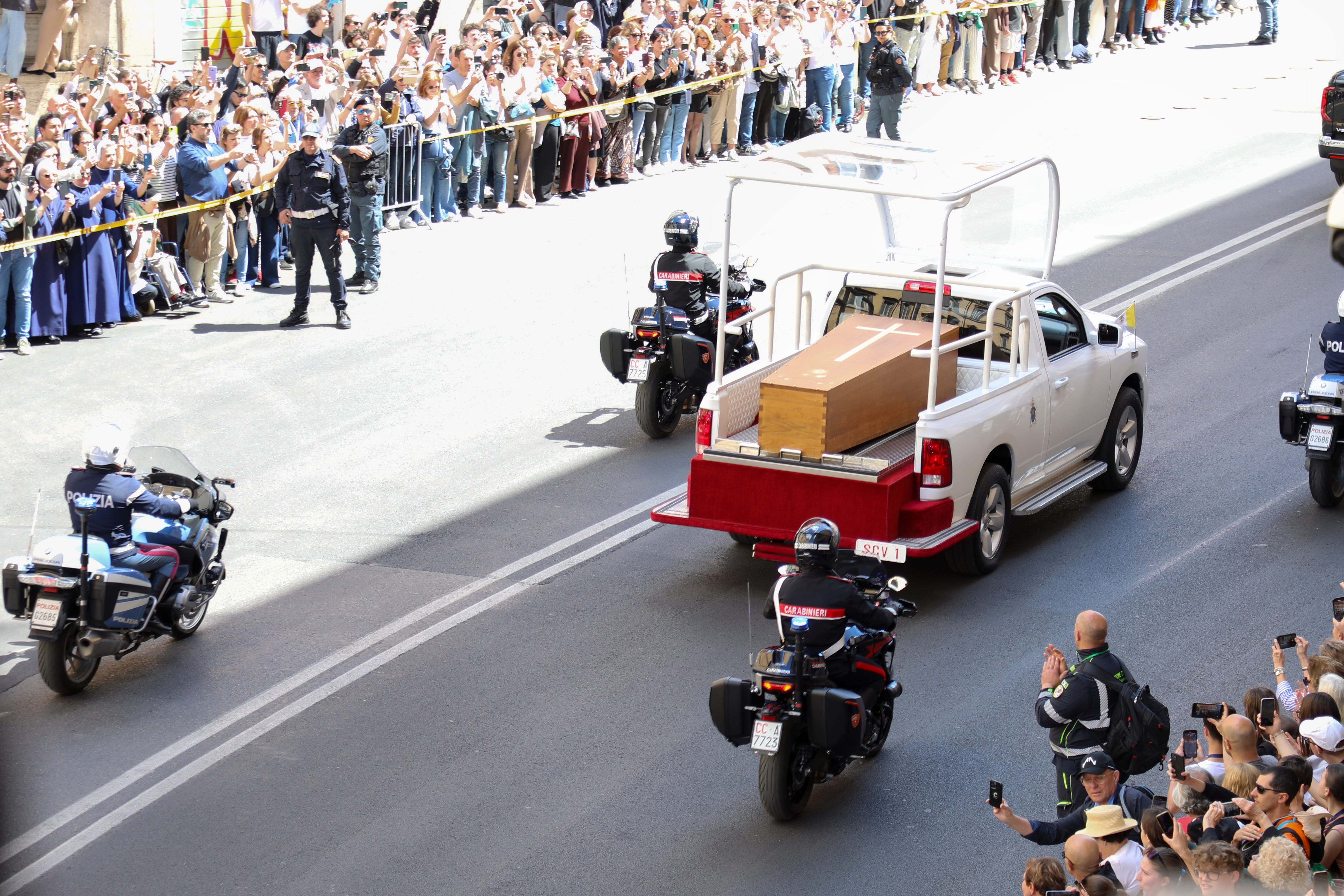
Pastor Universalis
In Memorium Pope Francis I
The papacy’s all a stage, some say,
and many men have given their turn
upon it, knowing they were to play
a role, and knowing themselves to be
still men beneath its mantle—
Yet were most man, and most
themselves within it, as are we all
inside the functions and the duties,
some great and many greatly small,
to which we muster our poor fragile
carapaces, otherwise doomed
to merely shrink and float away.
This one, at some unknown hour,
perhaps in early morning chambers
or thirty thousands above the Earth,
or sleepy hearing politicians
plead gratitude for the Holy Office,
chose, or was chosen, to raise his own
spent frame against this fearful age,
caught between life’s burdens and
obscenity of death, hoping
in some cure for indignities
of hospice, bills, contested wills,
of ending days in human flesh;
an age whose dearly-held deflections
were destined always to be thwarted
by the frankness of a child.
The child grasps that which the age
cannot: that all things end and yet persist,
perhaps in a forgotten closet somewhere
or in a realm beyond the sea
where Grandpa still plays Scrabble
with the Westerns on TV;
that life is an adventure, that even elders
can still be heroes, that creatures speak
just as they please to, and that mistakes
leave scars that feel will never heal
and never indeed do, but teach us
to live on anyway, and if we’re lucky
to see the others live wounded too.
One hard problem of this performance:
the skilled performer knows the bore
of self-absorption, and yet this Self
is both the canvas and the paint
awaiting patient the swift strokes
that pass from Earth and yet remain.
Some artists solve it deftly by
abandoning all artistry:
a maneuver needing great precision
to ensure one’s natural acting
won’t come off unnaturally.
This is the art He sets before us,
who wrote Himself into the play,
asking nothing but to follow,
whether it lead to some whale’s hunger
or a stint nailed to a tree;
or endless meetings, bulls, reporters,
and a permanent homesickness
for vast pampa thronged with horses,
for evening of a Southern summer
the moment when He first appeared,
not as storm nor wind but in
the close dark of a broken heart.
A heart that we could never fully
know, though all he seemed to want
was showing it as end approached:
in closing acts he strained to step
a final time above the chorus,
reveling in our cacophony;
perhaps we did not know him, as we
have not known ourselves; but in
his wheezing pilgrimage we knew
our own grim futures, and knew
that we will die, and saw a way,
with luck and grace,
those deaths could yet be useful—if not
with such bravura, nor in such
an office that the world will weep
for us, but with whatever stage
we find ourselves rewarded we may
face our fates and not feel trapped
by the limits of our powers
nor abandoned to despair for
all things done and left undone,
but trust that we were made for something,
and when we die we’ll walk on flowers.
Photo: Dipartimento della Protezione Civile