
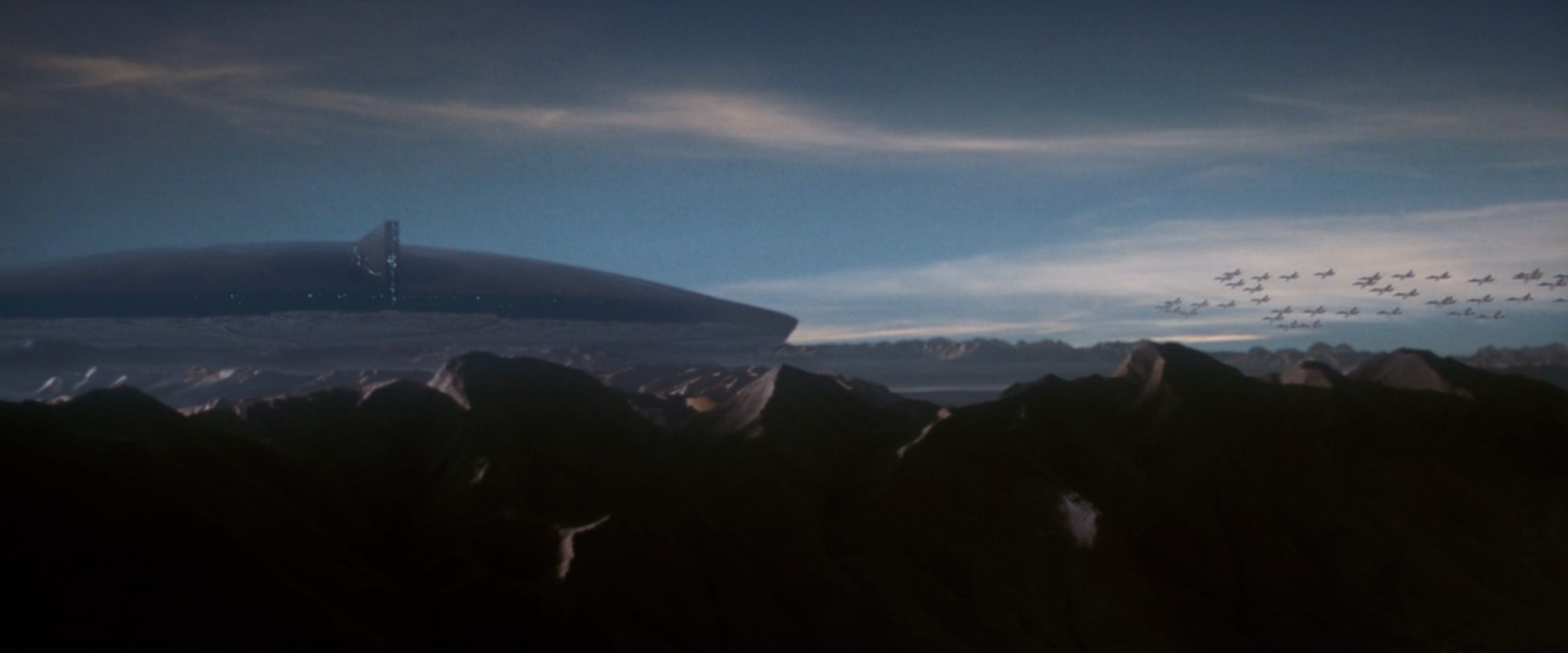
Our technological imagination often lags a long way behind Nature’s.
—Carl Jung
In 1957, the Swiss psychiatrist-mystic Carl Jung, responding to an inquiry about the UFO phenomenon, mused: “As a matter of fact the psychological aspect is so impressive, that one almost must regret that the Ufos [sic] seem to be real after all.”
Jung had indeed become fascinated by the postwar frenzy of celestial sightings. These had been crescendoing worldwide in the wake of pilot Kenneth Arnold’s 1947 Mount Rainier encounter, which bequeathed to us (due to a media miscommunication, apparently) the master image of the “flying saucer.” In 1958, Jung’s short treatise on the topic, Flying Saucers: A Modern Myth of Things Seen in the Skies, psychoanalyzed these events from a number of perspectives, largely settling on interpreting them as projections of a collective psyche in crisis. The possibility that they might also involve literal off-planet intelligences was, to him, of secondary importance.
The collective consciousness has come a long way since then. What was once the realm of kooks and hippies and spooky Mulders has taken its place somewhere just off center of mainstream, in large part thanks to a slow drip of disclosures from the US government revealing that, for Navy pilots at least, encounters with atmospheric objects that seemingly defy the known laws of physics are something of a routine occurrence. The Scullys among us are increasingly besieged.
But even as the acceptance that something is happening up there has solidified, what might be called spiritualized explanations have only proliferated. Belief in what has become, to flirt with oxymoron, the conventional conspiracy theory about straightforward point-to-point visitation from, say, Zeta Reticuli, is now a little passé. While the sophisticated Jungians wax lyrical about instantiated archetypes of wholeness, other theorists speak of “ultraterrestrials” hailing from other dimensions, or time-travelers who seek to gift us futuristic technology or avert some looming disaster.
But where some see “technological angels” (Jung’s phrase) others see technological demons. In June, Monsignor Stephen Rossetti, a Catholic priest and prominent exorcist, was disciplined by his archbishop for musing aloud that UFOs are most likely to be demonic attempts to dazzle and mislead vulnerable souls who are all too ready to believe in guidance, and even deliverance, from a source other than Jesus Christ. Some in the Church may not believe that it is Monsignor Rossetti’s place to weigh in on such matters, but many, in the pews and out, find themselves agreeing with him—up to and including the current Vice President of the United States.
Hollywood, for its part, has shown no such compunction for speculating. The cinematic and television history is vast, but zooming out and squinting, we may discern two basic streams in pop culture. The first, and perhaps most common, from the 1938 broadcast of War of the Worlds to the 1996 Independence Day, warns us that extraterrestrial powers seek to dominate if not exterminate us.
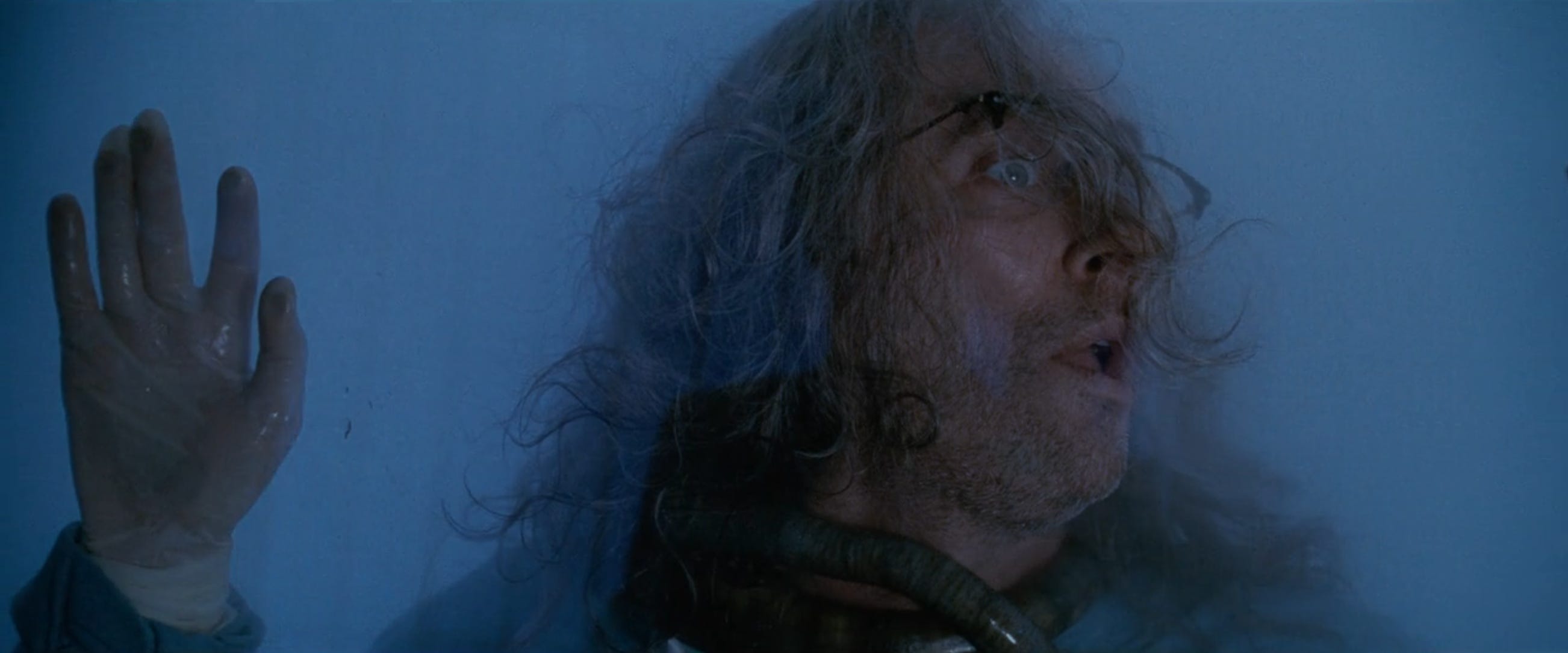
The other stream presents them instead as wise and benevolent, seeking to guide, help, and save. In either case, their arrival heralds a sort of secular Apocalypse, or Revelation: unmasking our vanity, inviting us to step outside of our fearful solipsism, revealing the meaning of the cosmos, and finally uniting humanity as one community, whether in war or in peace.
Steven Spielberg’s most recent entry in the genre, Disclosure Day (2026), falls squarely in the latter camp. We learn that the aliens have come to teach us “empathy,” if we would but only open our hard little hearts. This is in line with previous iterations of the savior mythology, in which the visitors come to prevent nuclear war, or environmental destruction, or whatever the primary obsession of the day happens to be. All well and good. Surely, Monsignor, a devil would not preach empathy, would he?
Though the film relishes its transgressive pose, Disclosure Day’s version of hidden reality is strikingly mundane. The most notable thing about Spielberg’s latest unearthly vision is that nothing about it is notable. It is pure, almost nostalgic recapitulation of the classic hits. The 1947 Roswell Incident was indeed the crash of a stereotypical flying saucer, piloted by stereotypical little grey men, whose recovery was covered up by a stereotypically, if implausibly, all-encompassing government conspiracy.
These Greys, while powerful and technologically advanced, are also persecuted and misunderstood, and so they must kidnap human children and put them through terrifying ordeals on the off-chance that they will, several decades in the future, somehow convince humankind … to be more empathetic.
Or something like this; the film ends just as the alien elder is about to deliver the meat of his or her actual message. Thus the writers are mercifully spared the task of devising something profound.
This is about as far from a spiritualized, or supernatural, or even Jungian-psychological, version of the saucer mythology as it is possible to get. It goes far in demonstrating our own persistent embarrassment over matters of the spirit that even the lesson in empathy must be dressed in the dull garb of materialism and scientism: Empathy, we are instructed in the set-piece monologue, is really just an evolutionary advantage.
That is not to say Spielberg does not attempt to take religious questions seriously. Before buying my ticket I had seen complaints on this score from at least one prominent religion commentator, and so I prepared myself for the sort of New Age slurry that is characteristic of the genre. But Disclosure Day tries, at least, to do something a little more interesting.
From the early scenes the film announces its intent to answer purported Christian objections. Eve Hewson’s Jane Blankenship, a former postulant at a Catholic convent who has suffered a crisis of faith, is the voice of skepticism: she initially opposes disclosure out of a fear that knowledge of life elsewhere will shatter humanity’s faith in the Divine. Set up to answer her is Sister Maura (Elizabeth Marvel), the sage Abbess, who reassures Jane, and the audience, that alien life is yet another revelation of God’s glory, of his good pleasure in populating his Creation with wonders beyond our imagining.
Sure, fine. As far as it goes. But it’s a rote answer that sidesteps the really interesting questions, for Christians at least. Are the Greys made in the image and likeness of God? Did Christ die and rise for them, too? Like the Ethiopian eunuch, is there anything to prevent them being baptized? You can hear the canon lawyers salivating already. “We’re gonna need a bigger Council.”
Perhaps we should not expect our summer thrillers to grapple with such questions. The real problem here is not a lack of theological minutiae, but something the opposite. The problem is the ambition to say something about a transcendent religious experience that fails to communicate, through the native language of film, any accompanying religious feeling.
Contrast this spiritual lassitude with Roland Emmerich’s aforementioned Independence Day, which I believe very nearly reaches the perfection of the genre.
Emmerich gives us precisely zero theological debate, and yet there is more genuine religious awe in Harry Connick, Jr., jokingly bolstering the spirits of his fellow fighter pilots, or in Judd Hirsch leading panicked refugees in praying the Shema Koleinu, than there is in the entirety of Spielberg’s film-length sermon. Hear our voice, O Lord our God; spare us and have mercy upon us, and accept our prayers in mercy and favor.
Despite the popcorn shallowness that some critics seemed determined to read into its blockbuster status, the film shows us characters who are overwhelmed and then remade by their experience.
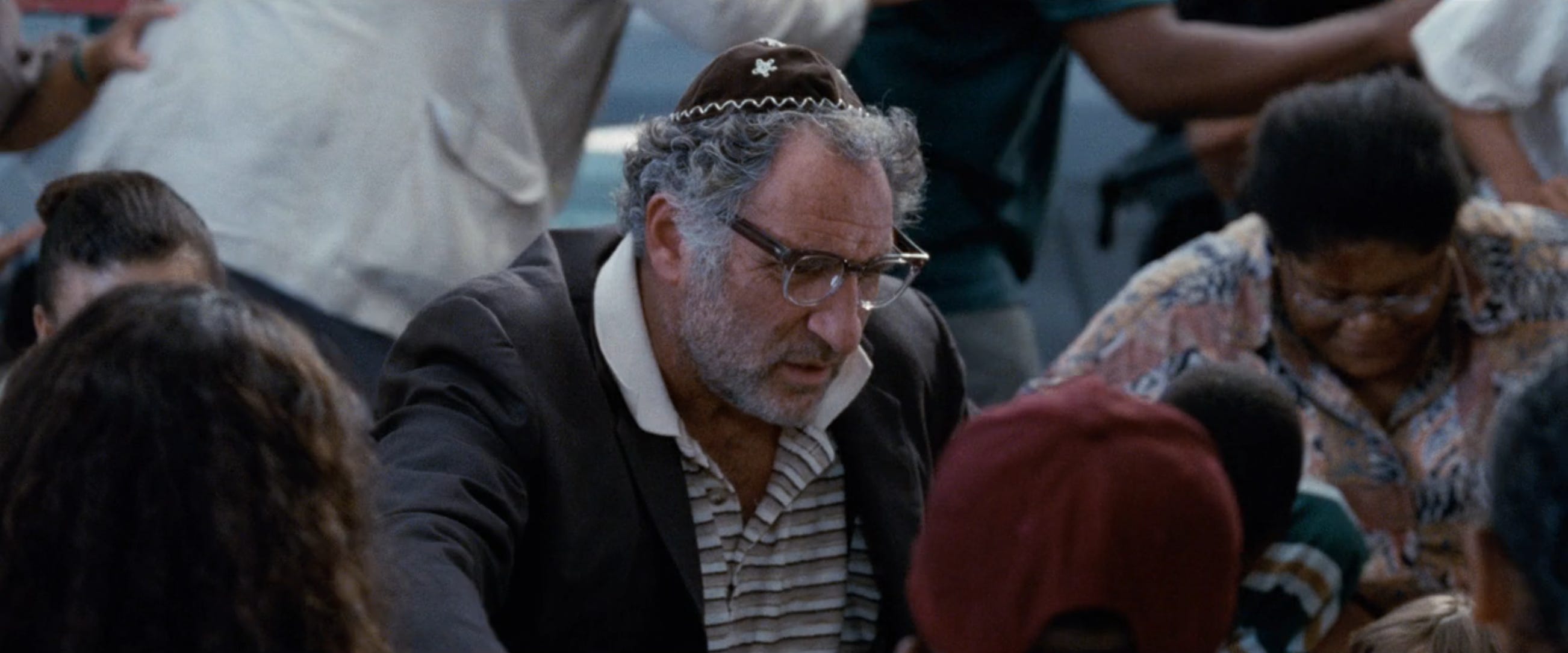
Bill Pullman’s President Whitmore is a lame duck who is transformed, through mistake after mistake, from a weak and triangulating politico to a leader of men. In Hirsch’s character, we see a man estranged from God, who returns to faith, and uses it to carry the others. In the superficially swaggering masculinity of Will Smith and Jeff Goldblum, we see two men floundering their way towards love. And in Randy Quaid’s alcoholic fool, Russell Casse, we see a ruined father, an embarrassment to his children, who does not leave off his foolishness, but shows us what it looks like for foolishness to be turned toward self-sacrifice rather than self-obsession.
In the Emmerichian mythology, alien arrival is truly an encounter with what Jung called the Numinous—a transcendent eruption from outside of normal life, which is always both awe-inspiring and terrifying. The psyche cannot expose itself to the Numinous and remain unchanged.
As any good landscape painter knows, the outer world communicates and interpenetrates the inner: the destruction of the cities in fire, the humiliation of the governing powers that keep the Earth in working order—such common tropes in post-apocalypticism—are potent visual symbols of the collapse of man’s psyche when confronted with the Beyond, the stripping down of all the quotidian structures of authority and knowledge upon which he once rooted his confidence in life.
The old structures will not serve where he must go next. And so they must be razed and built again, in a new form, brick by brick. As in the course of a civilization, so in the course of each individual’s inner life. To carry out this mission, it is notable that the remnants of humanity must retreat to the Desert, which for millennia has been the place of testing, exile, and spiritual renewal.
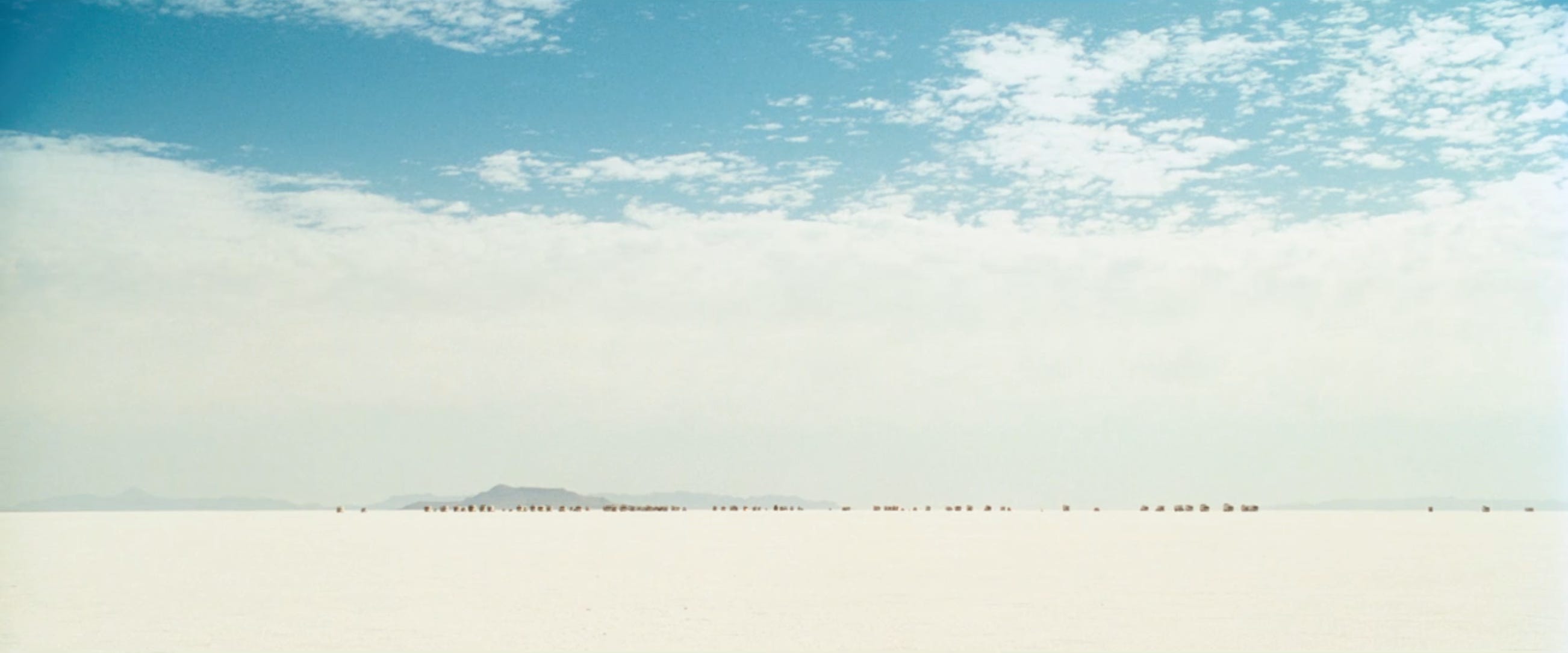
Wielding these symbols, consciously or not, Emmerich is able, amid the lasers and explosions and action-flick banter, to communicate something true about the Numinous. All while clearly having fun, and treating us to a palette of color and composition, drenched in pearls and teals and oranges and dusky purples, that is more gorgeous than it has any right to be. In this he stands in passionate contradiction of the current ubiquity of Hollywood’s sepia-toned dirges. Say what you will about the man, he grasped the sublime mythos of the Nineties: the Victorious Father, the power of love, Will Smith cracking wise, Vivica Fox sprinting through the desert in short shorts, American air supremacy.
By contrast, Sister Maura and her confederates may end up vindicated, but you couldn’t say transformed. The expressions of joy, fear, and shock we see performed for the camera read as little more than transient emotional perturbations, unconnected to any real internal crisis and subsequent psychological realignment.
Why can’t Disclosure Day deliver the Numinous for the next generation? The answer obviously does not lie in any lack of skill on Spielberg’s part. It lies in the fact that it is not mainly a UFO movie at all. Its real mythology is rooted in a lineage that traces less through Roswell and Jacques Vallée and more through Ellsberg, Woodward, and Snowden.
It is, fundamentally, a hymn to the power of the press and the indispensable role of the whistleblower. Its operating faith is not in extraterrestrials, or even empathy, but in the transformative and liberating potential of television news. Whether this is more or less unrealistic than a belief in aliens is perhaps a question for another review.
If Spielberg gives us no thrill in the encounter with alien life, it is because we are meant to be thrilled, instead, by the appearance of Emily Blunt’s triumphant visage under the bright stage lights. We are meant to be thrilled by the adrenaline-fueled scenes of Josh O’Connor taking control of the broadcast control room, barking orders in a hypnotic, manic Sorkinesque patter. Our emotional climax is meant to come, instead, in the rather anti-climactic struggle over the news station’s power generators.
Thus it does not much matter what the wise old Grey is about to say to the world at film’s end: that is merely a plot device for the real struggle, which has already concluded, over the control of information.
That is a worthwhile subject, and has driven many compelling dramas on its own terms, in films ranging from Pakula’s All the President’s Men (1976) to Mann’s The Insider (1999) to Spielberg’s own The Post (2017). Unfortunately, in the netherworld between sci-fi thriller and newsroom procedural, Disclosure Day ends up mashing together uninspiring renditions of both.
My recommendation for your next movie night, if forced to make one with laser gun to head: pop some popcorn, pop Independence Day on the flatscreen, and pray for peace—but keep the ammunition handy.
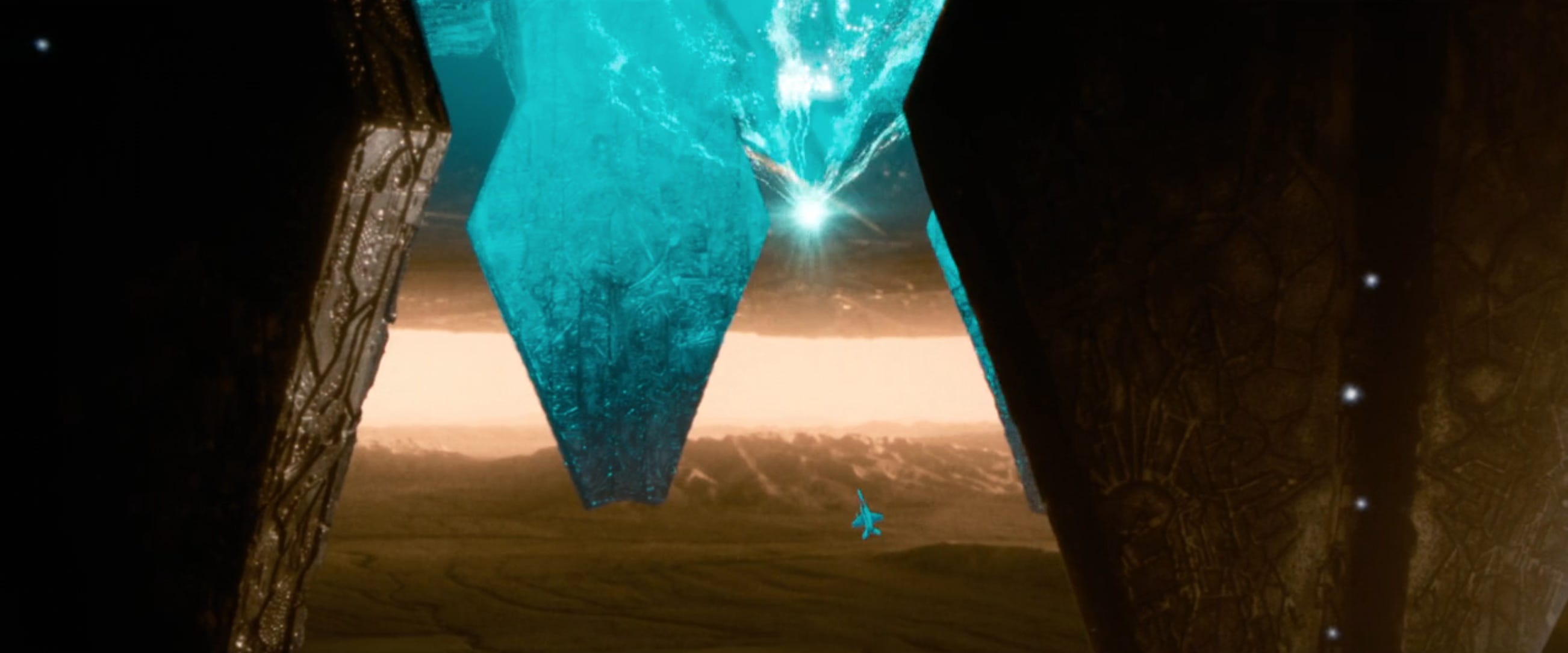
We were spoiled indeed in the 90s. Re-watched Independence Day recently and it is full of details and character moments (and cinematography) that were not appreciated at the time and are virtually absent from films today.